
Basalt Cylinders Uncovered and Foil-Faced IZOTEH
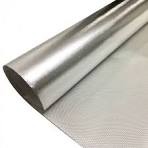
Glass and Foil Fabrics:

Description:
We provide a wide range of products that can be used in various fields, including construction, manufacturing, and many others. Our assortment includes: **Glass and Foil Fabrics:** Our glass fabrics are high-strength and lightweight materials, ideal for creating composite parts, reinforcing building structures, and manufacturing various products. We have glass fabrics with a density of $120-300 \, \text{g/m}^2$ available. The permissible temperature regime is from $ -200^\circ \text{C}$ to $+400^\circ \text{C}$, and a short-term temperature of $+550^\circ \text{C}$ is also allowed. **Foil Fabric Technical Specifications:** Thermal radiation reflection coefficient: no less than $97\%$ Material density: $140 - 600 \, \text{g/m}^2$
Fiberglass Reinforced Plastics:
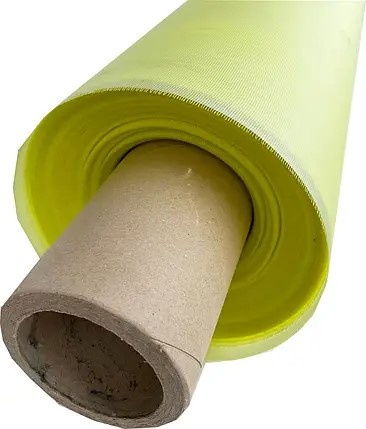
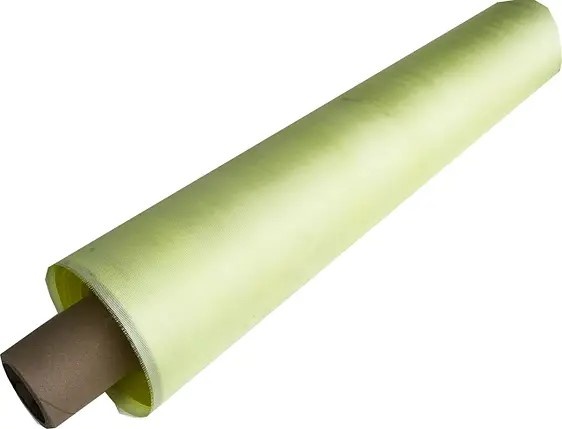
Our **fiberglass reinforced plastics** are composite materials that combine glass fabric and a polymer matrix. They have outstanding mechanical properties and can be used to create lightweight, strong, and durable products. The material is designed for use at temperatures from $-40^\circ \text{C}$ to $+60^\circ \text{C}$. It is virtually unaffected by moisture or aggressive substances, which extends the service life.
Silica and Basalt Fabrics:
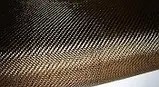
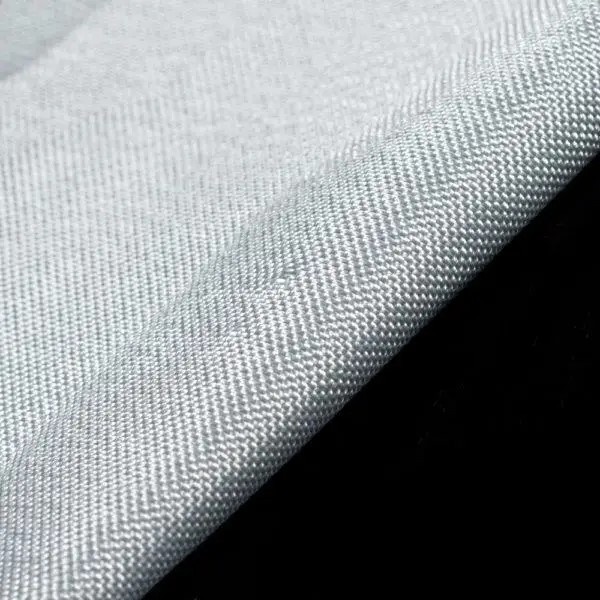
Basalt Fabrics
Basalt fabrics, silica materials, and products based on them have **high thermal stability** and **chemical inertness**, making them ideal for use in high temperatures and aggressive environments. Basalt fabrics are used as thermal insulation during welding work and as a casing for thermal insulation mats. The operating temperature of this material reaches $850^\circ \text{C}$.
Basalt fabrics are made from single-component raw materials and have a number of unique properties:
- Non-carcinogenic, unlike asbestos fabrics;
- **High thermal resistance, non-combustibility**, continuous application temperature is $800^\circ \text{C}$;
- High resistance to alkaline and acidic environments;
- Vibration-resistant material, can be used for turbine insulation;
- Unaffected by microorganisms and mold;
- Attractive colors (mainly from yellow-brown to dark brown).
Basalt fabric is an excellent insulating, reinforcing, and filtering material.
Silica Fabrics
Silica fabric is a glass fabric with an **increased silicon ($\text{Si}$) content ($96-98\%$)**, which provides an operating temperature range from $-200^\circ \text{C}$ to $1000^\circ \text{C}$, and short-term temperature loads up to $1200^\circ \text{C}$ are also allowed. A second feature of silica fabric is its **resistance to chemical reagents**, acids of any concentration (except hydrofluoric, phosphoric, hydrochloric) even at elevated temperatures, as well as weak alkalis and molten metals.
Due to a number of advantages, silica fabric, thanks to its non-toxicity, has completely replaced asbestos almost all over the world. Thus, silica fabrics are indispensable for **high-temperature and chemical protection** in the following industries:
- Automotive;
- Oil refining;
- Nuclear;
- Aerospace;
- In metallurgy at foundries;
- Shipbuilding.